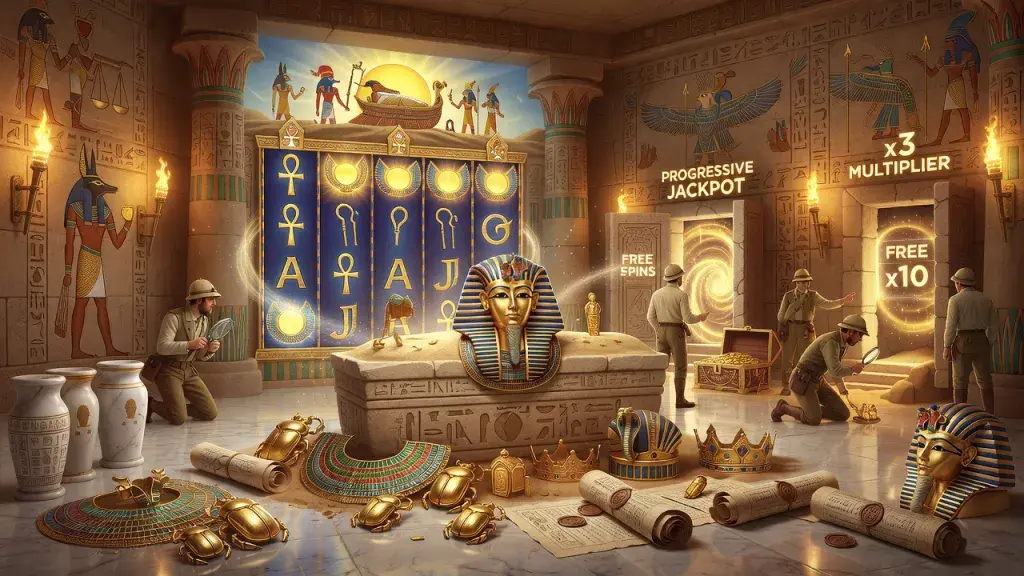
Gold masks, sealed tombs, and hieroglyphs carved four thousand years ago still shape how modern audiences imagine wealth and mystery. That fascination hasn't faded - it has migrated into digital form, where the symbols of pharaonic power now populate reels, bonus rounds, and animated temple facades. The appeal isn't accidental. Ancient Egypt offers a ready-made mythology of hidden riches, divine judgment, and eternal life, and game designers have mined that mythology for decades with remarkable consistency.
What makes this genre endure isn't just gold-colored symbols or pyramid backdrops. It's the narrative structure borrowed directly from Egyptian belief systems - the idea that treasure is guarded, that gods test mortals, and that only the worthy unlock the vault. This is where a title like the legacy of egypt slot distinguishes itself, translating that structure into mechanics players can actually engage with, rather than just decorative theming layered over generic slot logic.
This piece looks at how Egyptian legacy as a cultural and design concept gets built into gameplay, what separates a well-constructed temple of the gods theme from a shallow one, and why pharaoh riches slot titles continue to draw steady interest years after the trend first took hold.
The Cultural Roots of Egyptian Legacy in Modern Entertainment
Ancient Egypt has functioned as a symbol of wealth and mystery in Western entertainment since the 19th century, well before cinema or gaming existed. Napoleon's expedition to Egypt in 1798 brought scholars alongside soldiers, and the resulting flood of illustrated texts introduced Europe to obelisks, sarcophagi, and temple ruins on a mass scale. That fascination never really stopped - it simply found new media.
Why Ancient Egypt Still Captivates Audiences
Three elements make Egyptian civilization uniquely suited to storytelling: a visually distinct aesthetic, a well-documented belief system involving gods and the afterlife, and a real historical record of extraordinary wealth. Unlike invented fantasy worlds, Egyptian legacy carries the weight of verified history - the pyramids exist, Tutankhamun's tomb was genuinely found largely intact in 1922, and that authenticity adds credibility to the fantasy built on top of it.
From Archaeology to Pop Culture
The discovery of Tutankhamun's tomb by Howard Carter triggered a wave of "Egyptomania" that influenced architecture, fashion, and film throughout the 20th century. Game design inherited this same visual vocabulary - scarabs, ankh symbols, gold sarcophagi - because audiences already associate these images with hidden fortune and forbidden discovery.
Mythology as a Design Framework
Egyptian religion revolved around judgment, balance, and reward, concepts that map naturally onto reward-based game mechanics. The idea that Anubis weighs a heart against a feather to determine its fate is structurally similar to a bonus round determining a payout - both frame chance as a form of moral or cosmic trial.
Ancient Egypt Treasure as a Core Gameplay Theme
Treasure isn't a side detail in Egyptian-themed games - it's the entire premise. Ancient Egypt treasure functions as both the visual reward and the narrative motivator, giving players a reason to keep progressing beyond simple numerical payouts.
Symbols That Represent Wealth and Power
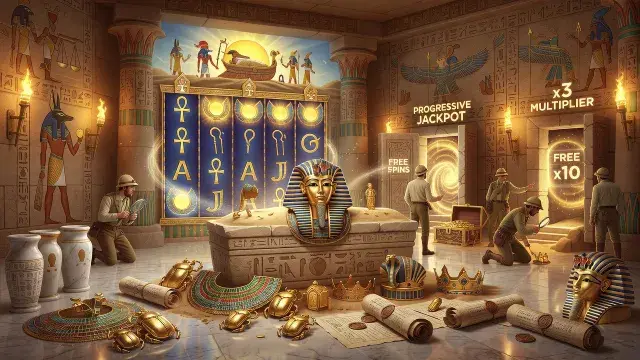
Common treasure iconography includes:
- Golden scarabs, historically linked to rebirth and protection
- Canopic jars, associated with preserved royal remains and ritual wealth
- Jeweled collars and pectoral ornaments worn by nobility
- Sealed sarcophagi hinting at treasure guarded within
- Papyrus scrolls representing hidden knowledge or maps to riches
Each symbol carries pre-existing cultural weight, meaning designers don't need lengthy explanations - players intuitively understand that a golden scarab signals value.
How Treasure Themes Translate Into Mechanics
Treasure-hunting narratives lend themselves naturally to progressive reveal mechanics - think tomb doors opening, chests unlocking, or hidden chambers becoming accessible after specific triggers. This turns a static payout into a small narrative event, which keeps engagement higher than a flat number appearing on screen.
Historical Accuracy Versus Creative License
Few Egyptian-themed games aim for museum-level accuracy, and that's a reasonable trade-off. Real Egyptian history spans roughly three thousand years across multiple dynasties, and compressing that into a single coherent aesthetic requires simplification. The goal is evocative authenticity, not historical documentation.
Temple of the Gods: Architecture and Symbolism in Design
If treasure is the reward, the temple of the gods is the stage. Temple architecture in Egyptian-themed games isn't just background art - it establishes tone, hints at difficulty, and often frames the entire bonus structure of a game.
The Role of Deities in Game Narrative
Figures like Ra, Anubis, Horus, and Isis appear repeatedly because each carries distinct symbolic territory: Ra governs the sun and daily renewal, Anubis oversees death and judgment, Horus represents kingship and protection. Assigning a specific deity to a specific bonus feature gives that feature narrative logic rather than arbitrary randomness.
Temple Layout as a Metaphor for Progression
Many designs structure their bonus rounds as a journey deeper into a temple - outer courtyards first, inner sanctums later. This mirrors how real Egyptian temples were physically built, with increasingly restricted access as one moved toward the sanctuary reserved for priests and pharaohs alone.
Visual Details That Strengthen Immersion
Hieroglyphic wall carvings, columned halls, and torch-lit corridors do more than decorate - they signal to the player that they've entered a space governed by different rules, often preceding a bonus trigger or multiplier event.
Pharaoh Riches Slot Mechanics Explained
The pharaoh riches slot category has become its own recognizable subgenre, built around the idea that the player is essentially a tomb raider or favored subject granted access to royal fortune.
Common Bonus Features in This Genre
Typical mechanics include expanding wilds shaped like royal insignia, scatter symbols triggering free spins framed as "entering the tomb," and multiplier ladders that increase as the player advances through a themed sequence. These features aren't interchangeable with generic slot mechanics - they're specifically dressed to reinforce the royal wealth narrative.
Symbol Hierarchy and Payout Structure
Pharaoh-themed titles typically rank symbols by royal status: lower-tier symbols use everyday objects like pottery or amulets, while high-tier symbols feature the pharaoh's mask, crown, or throne. This hierarchy gives players a visual shorthand for understanding relative value without reading a paytable in detail.
Volatility and Player Expectations
Games built around ancient Egypt treasure often lean toward medium-to-high volatility, matching the fantasy of rare but substantial rewards - consistent with the idea of unearthing a long-buried fortune rather than collecting small, frequent finds.
Legacy of Egypt Gameplay: A Practical Breakdown
Understanding legacy of egypt gameplay specifically requires looking at how theme and mechanics reinforce each other rather than existing as separate layers.
Core Gameplay Loop
The base structure typically follows a familiar spin-and-match format, but the Egyptian legacy framing changes how wins are presented - through animated reveals, temple-themed transitions, and symbol behavior tied to the mythology rather than arbitrary visual effects.
Bonus Rounds and Special Features
Free spin rounds are often framed as ceremonial events - entering a temple of the gods space where multipliers accumulate, echoing the idea of divine favor being granted progressively rather than all at once.
What Sets This Title Apart From Generic Egyptian Themes
Where many Egyptian-themed games recycle the same handful of symbols with minimal narrative connection, well-built titles integrate mythology into feature logic itself - meaning a bonus round tied to Anubis behaves differently, thematically and mechanically, from one tied to Ra.
Tips for Players Interested in Egyptian-Themed Games
Approaching this genre with a bit of context improves both enjoyment and expectation management.
Reading the Paytable Before Playing
Symbol hierarchy in pharaoh riches slot titles isn't always intuitive at first glance - checking the paytable clarifies which symbols carry the highest value and which trigger bonus sequences.
Understanding Volatility Before Committing a Budget
Higher volatility titles tied to treasure-hunting themes tend to pay less frequently but with larger potential rewards, so budgeting expectations should match that pattern rather than assuming steady, frequent wins.
Recognizing Genuine Design Depth Versus Surface Theming
A title with real design depth ties its mythology to mechanics - a shallow one simply reskins existing templates with gold symbols and hieroglyphs. Comparing a few titles side by side quickly reveals which category a given game falls into.
Frequently Asked Questions
What makes Egyptian-themed slot games different from other treasure-hunting themes?
Egyptian mythology provides a built-in moral and cosmic framework - judgment, the afterlife, divine favor - that other treasure themes like pirates or explorers don't naturally carry. This gives designers a ready structure for tying bonus features to narrative meaning rather than arbitrary randomness.
Are the deities and symbols used in these games historically accurate?
They're generally inspired by real Egyptian religion and iconography but simplified for clarity and visual impact. Figures like Anubis, Horus, and Ra are represented in recognizable forms, though the specific roles assigned to them in gameplay are creative interpretations rather than strict historical documentation.
Why do so many Egyptian-themed games use a temple structure for bonus rounds?
Temples were the physical center of religious and economic life in ancient Egypt, with restricted inner chambers reserved for priests and royalty. That layered access structure translates naturally into a bonus round where players progress deeper for greater rewards.
What should I check before playing a pharaoh riches slot title?
Review the paytable to understand symbol hierarchy, check the stated volatility level, and look at how bonus features are triggered. This gives a realistic sense of both the risk profile and what kind of session length to expect.
Does higher volatility mean better payouts in Egyptian-themed games?
Higher volatility means less frequent wins but larger potential payouts when they occur - it doesn't guarantee better overall returns. It simply changes the pattern and rhythm of how rewards are distributed during play.
Why has the Egyptian legacy theme remained popular for so long?
The combination of verified historical grandeur, distinct visual symbolism, and a mythology built around wealth and judgment gives designers material that rarely feels stale. Audiences also bring pre-existing familiarity with Egyptian imagery from museums, films, and documentaries, which lowers the barrier to engagement.