A chicken crossing a road of open flame lanes sounds like a cartoon setup, not a betting mechanism. Yet that exact premise has turned into one of the more compelling risk-and-reward formats found in online casino lobbies. The concept is simple to look at and surprisingly deep to master, which explains why so many newcomers spend their first few rounds losing small amounts while they figure out the rhythm of the game.
This guide breaks down everything a first-time player needs: the mechanics behind each round, the exact rules governing multipliers and cash-outs, and the practical habits that separate players who last from those who burn through their bankroll in minutes. Before jumping into the finer points of strategy, it helps to see the full picture in action - a step-by-step walkthrough on how chicken road game kaise khelte hain is available for anyone who wants a visual reference alongside the written explanation here. From there, we move into controls, timing, and the decision-making that actually determines outcomes.
Whether you've played similar crash-style games before or this is your first encounter with the format, the goal here is the same: give you a clear, no-nonsense understanding of how the game works so your first sessions are informed rather than experimental.
Understanding the Basics: Chicken Road Game How to Play
At its core, the game asks a simple question repeatedly: how far are you willing to push a rising multiplier before cashing out? The chicken moves forward across a series of lanes, and each successful step increases the potential payout. Stop too early and you leave money on the table. Push too far and the round ends with nothing.
The Core Objective
The player's only real task is deciding when to stop. There's no skill involved in the chicken's movement itself - that's determined by the game's underlying random outcome generator. Your control lies entirely in timing your exit relative to the growing multiplier displayed on screen.
How a Round Begins and Ends
Each round starts with a fixed wager placed before the chicken begins moving. From there, the multiplier climbs with every lane cleared. A round ends in one of two ways: you manually cash out and lock in your current multiplier, or the chicken fails to clear a lane and the round ends immediately, forfeiting the wager.
Why the Format Appeals to Beginners
Unlike table games that require memorizing odds tables or card values, this format reduces the decision tree to a single binary choice repeated over and over: continue or cash out. That simplicity is precisely why it attracts players who are new to online wagering but still want a game with genuine tension and pacing.
Chicken Road Game Rules Explained in Detail
Rules here aren't complicated, but they matter enormously because they determine how risk scales as the round progresses. Skipping this section is the most common reason beginners misjudge their exposure.
Bet Placement and Round Structure
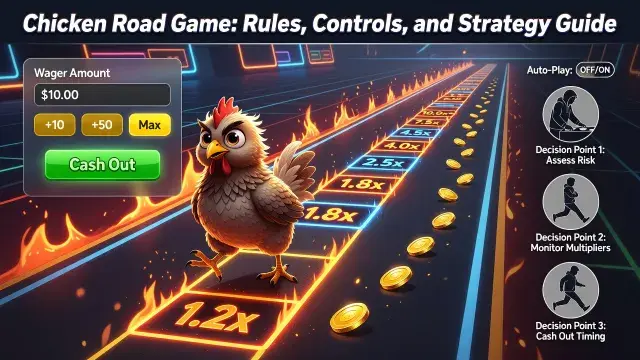
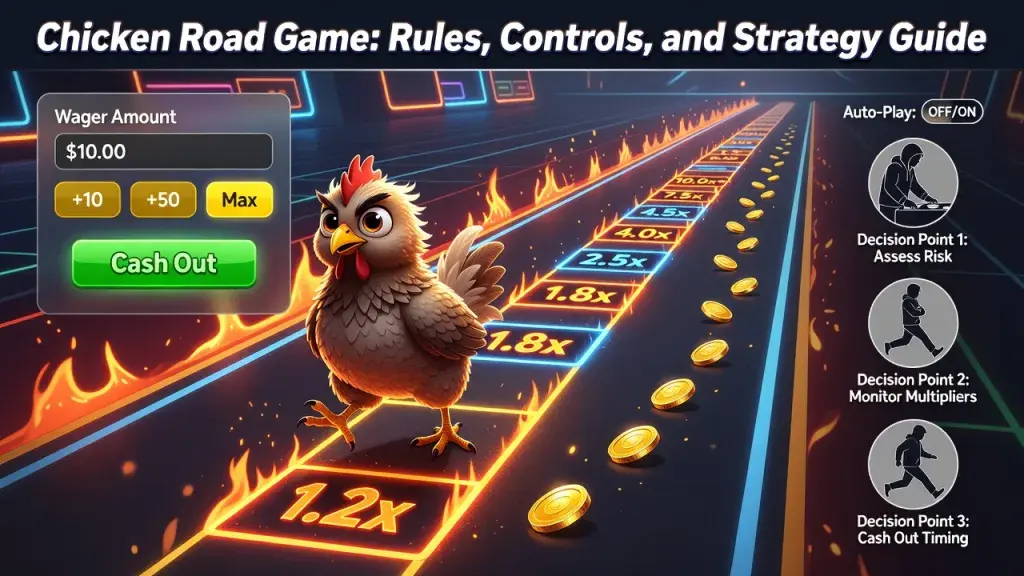
Before each round, players set a wager amount within the platform's minimum and maximum limits. Once the round begins, that wager is locked in - you cannot add to it mid-round. The multiplier tied to each lane is displayed clearly, so you always know what a successful cash-out at that point would return.
Multiplier Progression and Risk Scaling
As the chicken advances, the multiplier doesn't grow at a flat rate. Early lanes typically carry modest increases, while later lanes offer substantially higher multipliers paired with a higher chance of failure. This escalating risk curve is the central mechanic of the entire game.
Failure Conditions
A round fails the moment the chicken doesn't clear a lane - there's no partial credit or second chance. Understanding this binary outcome is essential to grasping why patience and discipline matter more than aggression.
- Wagers are fixed once the round starts
- Multipliers increase with each successful lane crossed
- Failure at any lane forfeits the entire wager
- Cashing out is the only way to secure winnings before failure occurs
Chicken Road Game Controls: What Beginners Need to Know
The interface is intentionally minimal, but knowing exactly what each control does prevents costly misclicks during a live round.
Placing and Adjusting Your Bet
Before the round starts, a bet input field lets you set your wager size, usually with quick-select buttons for common amounts. Some platforms also include a double-up or halve button to speed up bet sizing between rounds.
The Cash-Out Button
This is the single most important control in the entire game. It appears prominently once a round begins and remains active until the chicken fails or you manually trigger it. Timing your click here is the entirety of the game's skill component.
Auto-Play and Auto Cash-Out Settings
Many versions include an auto-play feature that lets you predetermine a cash-out multiplier, removing the need to react manually each round. This is particularly useful for players who want to test a consistent strategy without the risk of emotional decision-making mid-round.
Chicken Road Game Strategy for Consistent Play
Strategy in this game isn't about predicting outcomes - the underlying mechanism is random and no pattern-reading will change that. Instead, strategy is about managing exposure and setting rules for yourself before the emotional pressure of a live round clouds judgment.
Setting a Personal Cash-Out Threshold
Decide in advance the multiplier at which you'll cash out, and stick to it regardless of how the round is unfolding. Players who abandon their threshold mid-round chasing a higher payout are the ones who most often end up with nothing.
Bankroll Management Across Sessions
Treat your total bankroll as a resource to be spread across many rounds, not risked heavily on one. A common approach is capping any single wager at a small fraction of your total session bankroll, which allows you to absorb several failed rounds without being knocked out entirely.
Balancing Conservative and Aggressive Rounds
Some players alternate between low-multiplier, high-frequency cash-outs and occasional higher-risk attempts. This mixed approach can smooth out variance over a longer session compared to committing to one style exclusively.
Chicken Road Game Gameplay Tips That Actually Matter
Beyond the mechanics and structural rules, a handful of practical habits separate players who enjoy sustainable sessions from those who deplete their bankroll quickly.
Avoid Chasing Losses
After a failed round, the instinct to immediately increase your wager to recover losses is strong - and almost always counterproductive. The randomness of each round means a bigger bet doesn't improve your odds of success.
Watch the Multiplier Curve, Not Just the Number
Pay attention to how quickly the multiplier accelerates in later lanes. Recognizing where the curve steepens helps you understand why cashing out earlier is often the mathematically sounder choice, even if it feels less exciting.
Use Demo Modes Before Wagering Real Money
If the platform offers a free-play or demo version, use it to get comfortable with the pacing and controls before committing actual funds. This removes the learning curve from the money you're actually risking.
Frequently Asked Questions
Is there a way to predict when the chicken will fail?
No. Each lane's outcome is determined by a random process independent of previous rounds. Any pattern you think you notice is coincidental, not predictive.
What's a reasonable cash-out multiplier for beginners?
Many new players start by cashing out at lower multipliers to build confidence and understand the pacing before attempting longer runs. There's no universal correct number - it depends on your risk tolerance and bankroll size.
Can I change my bet amount mid-round?
No. Once a round begins, your wager is locked in. Any adjustments to bet size must happen before the next round starts.
Does auto cash-out remove all risk?
Auto cash-out removes decision-making risk by locking in your exit point in advance, but it doesn't change the underlying odds of the round itself. It's a discipline tool, not a guarantee of profit.
How much should I wager per round as a beginner?
A common guideline is keeping individual wagers to a small percentage of your total session bankroll, which allows you to withstand several failed rounds while you learn the game's pacing.
Is this game similar to other crash-style betting games?
Yes, structurally it shares the same rising-multiplier, manual cash-out format found in other crash games, just presented with a road-crossing theme instead of an ascending graph.