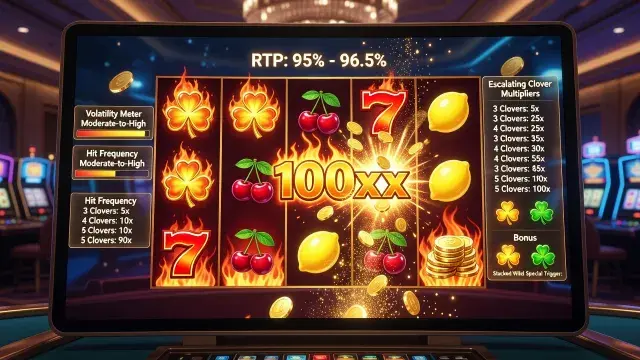
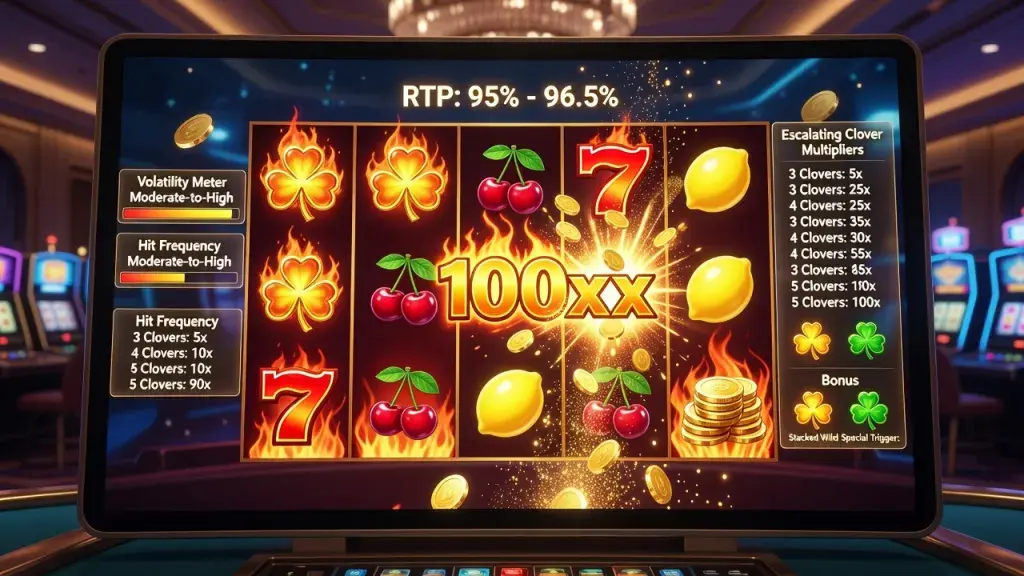
A single percentage point separates a merely decent slot from a genuinely player-friendly one. That gap sounds trivial until you run it across ten thousand spins, where it translates into real currency lost or retained. Blazing Clover has built a following partly because its numbers hold up under scrutiny, and partly because its top-end payouts give patient players something concrete to chase. This piece breaks down exactly what those numbers mean, why they matter, and how a 100x hit actually happens on the reels.
Most players glance at a slot's return figure, nod, and move on without understanding what drives it. That's a mistake. The blazing clover RTP is not a static guarantee - it's a mathematical average built from millions of simulated spins, and understanding its mechanics tells you far more about your realistic chances than the headline number alone. Before committing real bankroll, it's worth checking the verified data at 100 blazing clover rtp, which lays out the exact percentage alongside volatility and hit-frequency figures. Once you know how that number is calculated, the rest of the game's design starts making a lot more sense.
What follows is a structured look at the game's statistical backbone: the confirmed RTP percentage for blazing clover, how it compares against similar titles, what the internal game stats reveal about hit frequency and volatility, and - perhaps most interesting to regular players - what actually needs to align for a 100x blazing clover payout to land.
Understanding RTP and Why It Matters for Slot Players
Return to Player is the theoretical percentage of all wagered money a slot pays back to players over an extended run - typically calculated across millions of simulated spins by the game's developer before release. It is not a promise for any single session. It is a long-term average baked into the math model.
What RTP Actually Measures
RTP measures the inverse of the house edge. If a slot carries a 96% RTP, the operator retains 4% of all wagers over time as its statistical margin. This figure never changes session to session; it's fixed in the game's code and audited by independent testing labs before the title goes live on any platform.
Common Misconceptions About RTP Percentages
Players frequently assume a 96% RTP means they'll get back $96 for every $100 wagered in a single sitting. That's not how it works. Short-term results swing wildly above and below the average - you might lose your entire bankroll in twenty spins or double it in ten. RTP only becomes statistically meaningful across thousands of rounds, which is why casual players often experience results that feel disconnected from the published figure.
Why RTP Differs From Volatility
RTP tells you how much a slot pays back on average; volatility tells you how that payback is distributed. Two slots can share an identical RTP percentage while behaving completely differently - one paying small wins frequently, the other holding back for rare, large hits. Blazing Clover leans toward the higher-volatility end, which directly explains why its big multipliers feel so significant when they land.
Blazing Clover RTP: The Confirmed Percentage and What It Reveals
The blazing clover RTP sits within a range that most regulated slot developers target for mid-to-high volatility titles - generally reported in the 95% to 96.5% band depending on the specific platform build and jurisdiction. This places it comfortably above the industry's lower-tier offerings, which often dip below 94%.
How the Percentage Was Calculated
Developers arrive at this figure through simulation software that runs the game's paytable, symbol weighting, and bonus triggers across tens of millions of virtual spins. The resulting average becomes the certified RTP percentage for blazing clover, which then gets submitted to independent auditors for verification before public release.
Comparing Blazing Clover's RTP to Category Averages
Fruit-themed slots as a category tend to cluster around 95%-96% RTP, reflecting their broad appeal and lower barrier to entry for casual players. Blazing Clover's placement within that band signals a deliberate balance: generous enough to keep sessions engaging, tight enough to sustain the volatility needed for its headline multiplier wins.
Regional Variance in RTP Reporting
Because different platforms sometimes run slightly adjusted configurations for regulatory reasons, the exact clover slot RTP figure can shift by a fraction of a percentage point between operators. Always confirm the specific percentage listed on the platform you're using rather than relying on a single universal number.
Blazing Clover Game Stats: Volatility, Hit Frequency, and Payout Structure
Beyond the headline RTP, the deeper blazing clover game stats give a fuller picture of what a typical session looks like. Hit frequency, maximum win potential, and paytable structure all shape the actual player experience far more than the RTP figure alone.
Hit Frequency and What It Tells You
Hit frequency indicates how often a spin returns any payout, regardless of size. Blazing Clover's hit frequency sits in a moderate range, meaning players see wins often enough to stay engaged, but the majority of those wins are modest relative to the stake. This structure supports longer play sessions without requiring an outsized bankroll.
Maximum Win Potential and Multiplier Caps
The game's paytable is built around escalating multipliers tied to clover symbol combinations, with the ceiling reaching well beyond standard payouts on rare, fully-aligned spins. This maximum win cap is what makes the game statistically interesting for players chasing larger returns rather than steady, incremental gains.
Symbol Weighting and Paytable Breakdown
Lower-value symbols appear with higher frequency to sustain regular small wins, while clover and bonus symbols are weighted more sparingly, reserved for the rarer high-multiplier outcomes. This weighting is the mechanical reason volatility feels the way it does during actual play.
- Moderate-to-high volatility profile
- Above-average hit frequency for its category
- Escalating multiplier structure tied to clover symbols
- Maximum payout ceiling significantly above base bet
What a 100x Win Actually Means in Blazing Clover
A 100x blazing clover result means the payout on that spin equals one hundred times the original stake. On a $1 bet, that's a $100 return from a single spin - a result that sits well outside the game's average outcome and squarely in its statistical tail.
How Often 100x Wins Realistically Occur
Given the game's volatility profile, hits at or above the 100x threshold are infrequent by design. They require a specific combination of high-value symbols landing simultaneously across active paylines, often assisted by a bonus multiplier trigger. Across a large sample of spins, this outcome represents a small fraction of total winning rounds - consistent with how high-volatility slots are engineered to distribute rare, large payouts against many smaller ones.
What Triggers the Bigger Multiplier Wins
The 100x tier typically requires either a full-line match of the highest-paying clover symbol or a stacked win combined with an active bonus multiplier feature. Isolated symbol luck alone rarely produces this result; it's usually the interaction between base-game alignment and a triggered feature that pushes the payout into triple-digit multiplier territory.
Bankroll Implications of Chasing High Multipliers
Because 100x outcomes are statistically rare, players targeting them need a bankroll sized for extended variance - enough spins to reasonably encounter the outlier event without depleting funds first. Betting strategies that ignore this reality tend to exhaust bankrolls well before a significant multiplier ever appears.
How Blazing Clover's RTP Compares to Other Clover-Themed Slots
The clover slot RTP category is crowded, and Blazing Clover holds a competitive position without necessarily topping every chart. Comparing it against peers clarifies where it earns its reputation.
RTP Positioning Against Similar Titles
Most clover and fruit-themed slots on the market report RTPs between 94% and 96.5%. Blazing Clover typically lands at or slightly above the midpoint of that range, positioning it as a reasonably player-favorable option without being an outlier.
Volatility Differences Across the Category
Some competing clover slots opt for lower volatility with frequent small wins and no significant multiplier ceiling. Blazing Clover's higher-volatility design differentiates it by offering the possibility of a 100x blazing clover result, which lower-volatility competitors structurally cannot replicate as often.
Why RTP Alone Doesn't Tell the Full Story
Two slots with nearly identical RTP percentages can produce very different player experiences depending on volatility and paytable design. Judging a game purely by its RTP percentage for blazing clover, without factoring in hit frequency and multiplier structure, gives an incomplete picture of what actual play will feel like.
Practical Tips for Playing Blazing Clover With RTP in Mind
Understanding the numbers only helps if it changes how you actually play. A few practical adjustments make the statistical picture work in your favor rather than against it.
Setting Session Limits Based on Volatility
Given the game's higher volatility, setting a firm loss limit before starting a session prevents the natural swings from eroding a bankroll faster than expected. Volatility means variance runs in both directions - protect against the downside before chasing the upside.
Bet Sizing Strategies for Long-Term Play
Smaller, consistent bet sizes relative to total bankroll allow more spins within a session, which statistically improves the odds of encountering a higher-multiplier hit before funds run out. Oversized bets relative to bankroll shorten the session and reduce exposure to the rare outcomes that make the game worth playing.
Reading Paytables Before You Play
Every serious player should review the in-game paytable before committing real money, confirming symbol values and multiplier triggers match expectations. This single habit prevents most of the confusion players report about "unexpected" payout behavior.
What is the confirmed blazing clover RTP percentage?
The figure generally falls between 95% and 96.5%, though the exact number can vary slightly by platform. Always check the specific RTP listed on the operator you're using before playing.
Is a 100x blazing clover win common?
No. It's a rare, high-tail outcome tied to full symbol alignment combined with bonus multiplier triggers. Most sessions will not produce a payout at this level.
Does higher RTP mean guaranteed short-term wins?
No. RTP is a long-term statistical average, not a session guarantee. Short-term results can deviate significantly above or below the published percentage.
How does volatility affect my experience differently than RTP?
RTP tells you the average return over time, while volatility tells you how unevenly that return is distributed. High volatility means fewer, larger wins rather than frequent small ones, which shapes how a session actually feels.
Where can I verify the accurate RTP percentage for blazing clover?
Check the official paytable within the game itself or the operator's published game information page, since these figures are independently audited before release. Avoid relying on unverified third-party claims.
Should I adjust my bet size to chase a 100x multiplier?
Reducing individual bet size relative to your total bankroll extends your number of spins, which improves your statistical exposure to rare outcomes. Increasing bet size to chase the multiplier faster typically shortens your session and reduces your overall chances.